A backlink is a link from somebody else’s site to yours. To Google it’s a recommendation: somebody thought you were worth mentioning. That’s why links have been one of the strongest signals from the beginning, and why a whole grey industry grew up around them.
The short answer to the question in the title: yes, they still work — but not the way they’re sold.
What has changed
It used to be counted. A thousand links from anything was better than ten. Today what matters is who linked, from what kind of text, and whether the recommendation makes sense.
In practice that means:
- One link from a well-known site in your industry is worth more than a hundred from company directories.
- A link from within a text that says something about you is worth more than a link in a footer.
- A link from a site in your country and your language is worth more for local search.
- Five hundred links acquired suddenly is the best way to look suspicious.
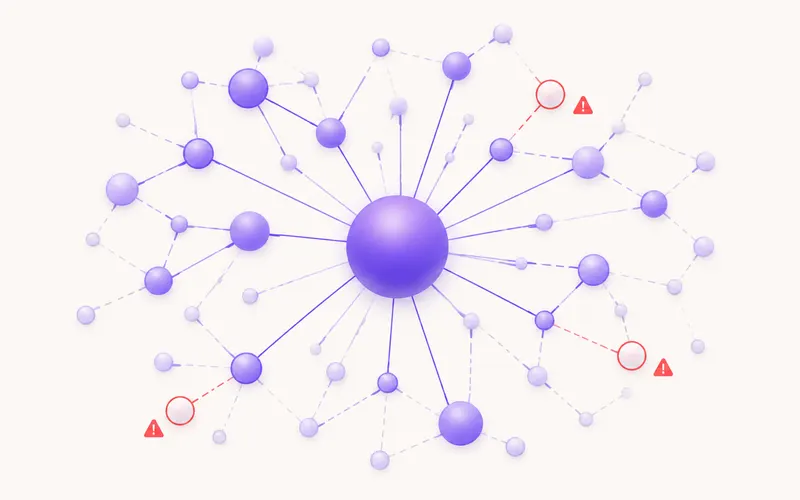
How many you actually need
There is no number — there is a comparison. Look at the three sites appearing above you for a keyword that matters and see how many different domains link to them. That’s your target, not some general number off the internet.
For a local business that number is usually small: fifteen to thirty decent domains is already a good position. For a national shop it’s much higher.
An important distinction people mix up: it’s the number of different domains that counts, not the number of links. Two hundred links from one forum are one domain.
Eight ways that work, by effort against effect
1. Make something that gets mentioned naturally. A calculator, a price table, a comparison, a map, a list of regulations. People link to a tool, not to a sales page.
2. Local and trade directories. Chambers of commerce, associations, trade bodies, town portals. Not glamorous, but real and quick.
3. Suppliers and partners. If you sell somebody’s goods or work with them, ask to be put on their “where to buy” or “our partners” page. This is the easiest link that most people never ask for.
4. Local media and portals. An opening, a donation, a new service, sponsoring a club — those are news for a local portal, and you get a link from within the article.
5. A guest article on a site in a related field. Not an invented “guest post” on a content farm, but a real article on a site people read.
6. Fixing broken links. Find an article that links to a page that no longer exists where you have your own on the same topic — and get in touch with the author. It works because you’re solving their problem.
7. Mentions without a link. Somebody mentioned you by name but didn’t link. One email and you have a link. This is the fastest win on the list.
8. Data and research. Publish figures from your own work — average prices, lead times, industry statistics. Data gets cited, and a citation carries a link.
What not to do
- Don’t buy link packages. “500 backlinks for £20” are generated sites Google recognises. At best they do nothing.
- Don’t swap links en masse. “I’ll link you, you link me” on a small scale is normal. On a large scale it’s an easily visible pattern.
- Don’t buy expired domains to redirect to your own.
- Don’t post forum comments with a link in the signature. They don’t work any more, and they make an impression.
- Don’t chase the number. Ten good ones a year beats two hundred bad ones.
It’s worth knowing this too: bad links today are mostly ignored, not penalised. But the money you spent on them is gone, and so is the time.
How to see where you stand
Track three things, not one:
- the number of different domains linking to you (is it growing month on month)
- new and lost links — a site that linked to you and then removed it is a signal
- competitors’ links that you don’t have — that’s a ready-made list of sites worth approaching
The last one is the most useful: if three competitors have a link from the same portal, that portal links to companies in your industry — and it will link to you too. Backlink analysis does exactly that comparison.
In short
- Links still decide, but quality and context are what’s looked at, not the number.
- Set your target by comparing with three competitors, not with a general number.
- Different domains are counted, not individual links.
- The fastest wins: suppliers and partners, mentions without a link, local directories.
- Buying links is a cost with no return; acquiring a large number suddenly is a signal you don’t want.