If you work with people who come to you or you go to them — a hairdresser, a dentist, a tradesman, a restaurant, a repair shop, a solicitor — local SEO brings you more work than everything else put together. And the best part: for most of it you don’t even need a website.
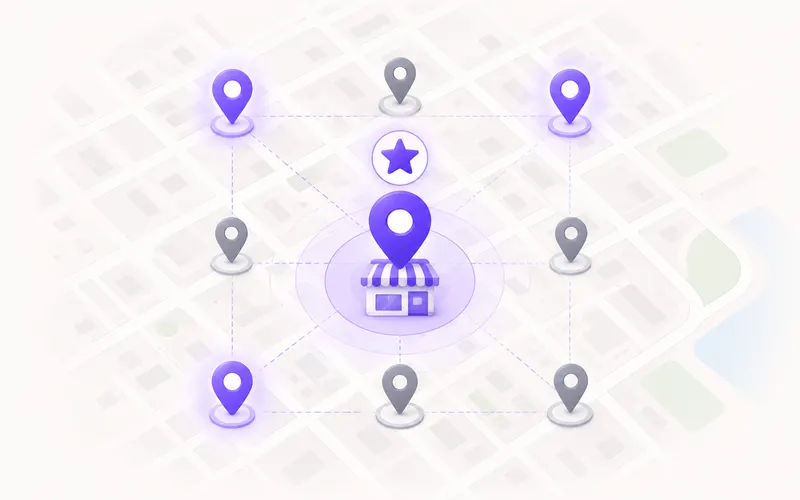
When somebody types “plumber Manchester” or “pizza near me”, Google first shows three companies with a map. Only below that do the ordinary results begin. Those three places take the largest share of clicks, and they’re competed for by completely different rules from the rest of search.
What decides who gets into those three places
Three things, in order of importance:
1. Proximity. How close you are to whoever is searching. You can’t change this and it’s the biggest factor. That’s why “near me” searches give different results to two people in the same town.
2. How complete and active the profile is. This you can change, and this is where it’s won.
3. Reviews. The number, the average and — as many people don’t know — whether you reply to them.
The Google profile: what to fill in, in order
A complete profile is the one thing on the list that is entirely free and entirely in your hands. Work in this order:
- The correct category. The single biggest mistake. “Restaurant” and “pizzeria” aren’t the same — Google shows you by the category you chose. Take the most precise one that exists, then add secondary categories.
- Opening hours, including bank holidays. A profile saying “closed” when you’re open loses the customer that second.
- A phone number somebody answers and an address that matches the one on the site, letter for letter. If the site says “12 Oxford Street” and the profile says “12 Oxford St.”, that’s a weaker signal to Google than when they’re identical.
- Photographs, real ones. Not stock — the interior, the team, the work. Profiles with photographs get noticeably more clicks than those without.
- Services and products with prices. It fills out more of the profile and gives Google text to match you against queries.
- Questions and answers. You can ask a question yourself and answer it — that isn’t a trick, it’s the intended use. Put up the five questions people genuinely ask you on the phone.
- Posts, once every couple of weeks. Short, with a photograph. A signal that the business is alive.
Reviews: how many, how, and what about a bad one
How many: the goal is to have more than the average of the three competitors appearing above you. Look at how many they have and have at least that.
How to get them: the only approach that really works is to ask at the right moment — right after the job is finished, while the person is happy, with a direct link (Google gives you one in the profile). Not in an email a week later.
Don’t buy reviews. Not because it’s unethical — because it’s recognisable, and the profile can be suspended.
What about a bad review: reply to it, calmly, concretely and without arguing. You aren’t writing the reply for that person but for everyone who will read it later. A company with 4.6 and composed replies to two bad ones makes a better impression than a company with a perfect 5.0 and ten reviews.
What on the site helps local visibility
If you have a site, these five carry the most:
- The address and phone number in the footer of every page, as text and not as an image.
- A separate page per town or area if you work in several places — but a real page with real content, not the same text with the town name swapped. Google recognises the latter and ignores it.
LocalBusinessstructured data — the address, opening hours and phone number in a form search reads directly.- An embedded map on the contact page.
- Texts on local topics — “how much does a boiler replacement cost in Manchester” catches a query national sites don’t cover.
How to check where you really are
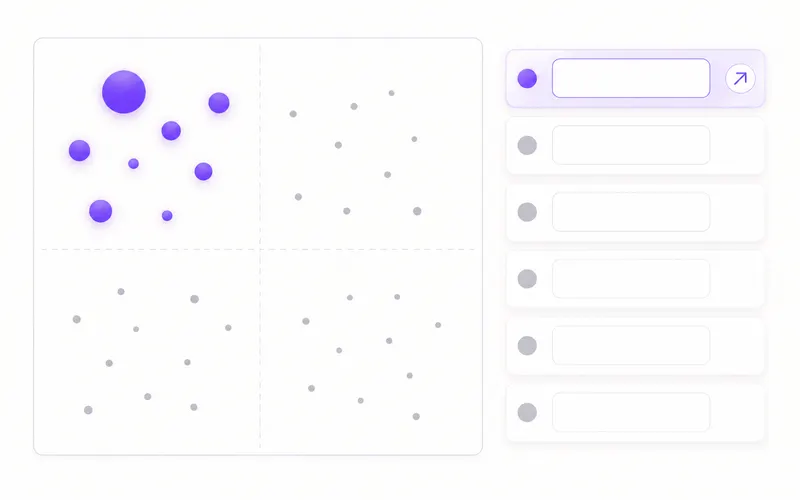
A search you run yourself isn’t reliable — Google knows your location and your history, so it shows you a better result than it shows a stranger. For local queries, the position differs from street to street.
That’s why local positions are measured from a specified location, not from your own browser. In our tool you choose the town when setting up rank tracking, and it measures as if somebody were searching from there — that’s how rank tracking works.
In short
- The three map places take most of the clicks for local queries, and are chosen by proximity, profile and reviews.
- The profile category is the single biggest mistake people make.
- Ask for reviews right after the job is done; reply to bad ones calmly, because other people read the reply.
- On the site: the address as text, a page per town with real content,
LocalBusinessdata. - Don’t measure your own position from your own browser — you’ll get a prettier picture than the real one.