Local SEO checklist: 111 checks for your own town
The customer is in your town. They're finding somebody else. When somebody nearby looks for the service you provide, three companies appear on the map — and it's almost always the same three. This checklist walks through 111 things that decide whether you're one of them.
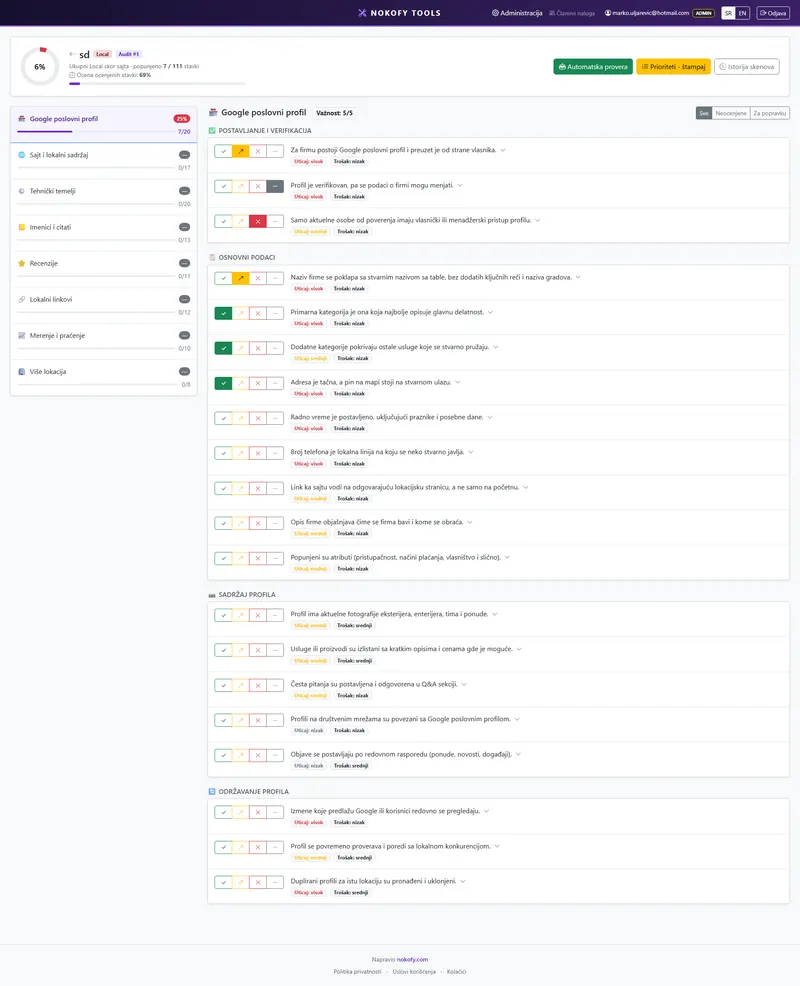
0
checks in this checklist
across 8 areas · every item explains why it matters and how to fix it
What it covers
The items are split into areas. The number beside each says how many checks it carries.
Why a checklist rather than general advice
„Fill in your Google profile and ask for reviews.“ That’s roughly the entire advice you’ll find about local SEO, and it’s why most companies stop halfway.
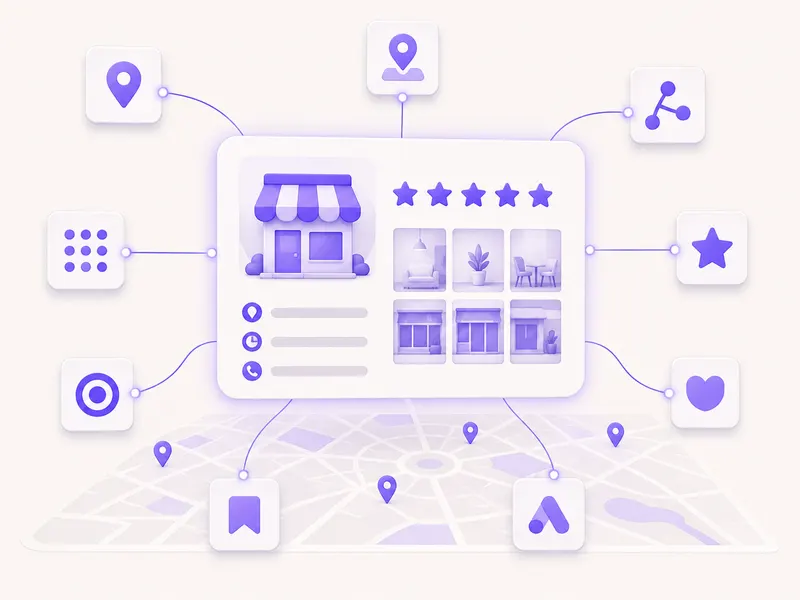
A filled-in profile isn’t the same as a well-set-up profile. Category, holiday opening hours, service descriptions, photographs, questions and answers, posts — each of those has its own rule, and each gets missed for the same reason: nobody says it exists.
The same goes for the rest. The address on your site has to be written identically to the profile and the directories — down to the comma. A page per location has to carry real content, not a copy with the town name swapped. Those are concrete things, and there are 111 of them.
They’re split into eight areas, in the order the work gets done: profile, site, technicals, directories, reviews, links, measurement, and multiple locations separately.
What one item looks like
Every item has five parts:
- The check itself — one sentence with no jargon. For instance: the name, address and phone number are written identically on the site, in the profile and in the directories.
- Why it matters — the concrete consequence, not theory.
- How to fix it — the steps. Where to click, what to change, what it looks like when done.
- Impact rating (1–3) — how much it changes your visibility in your own area.
- Estimated cost of the fix (1–3) — a one is five minutes in the profile, a three is work that runs for months.
Each item comes with recommended tools, marked free or paid.
You score with four buttons: Good, Could be better, Bad, Not applicable. The last is excluded from the score — if you have one branch, the multiple-locations area doesn’t drag your result down.
The repair plan
Everything scored „Bad“ or „Could be better“ goes into the repair plan, sorted by the formula (impact + cheapness) × urgency.
With local SEO that formula almost always puts Google Business Profile at the top. The reason is simple: the impact is greatest and the cost is smallest — most of those changes are a few minutes of work, without a single line of code.
Links and directories come lower, because they take longer. Not because they don’t matter, but because you pick what’s within arm’s reach first.
The plan exports to PDF and CSV.
What the tool scores instead of you
The automatic check covers around 150 checks and fills in part of the scores by itself.
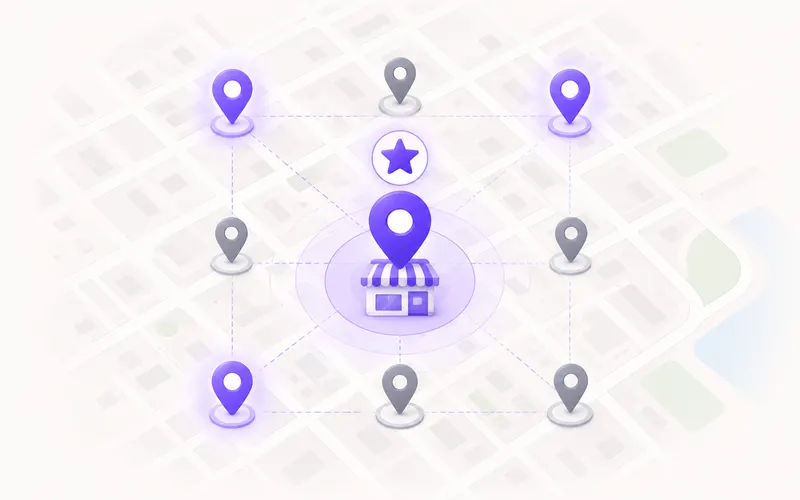
It takes a sample of pages by type: up to eight products, four categories, two text pages, the basket and the homepage, and takes two to five minutes. For the local part it looks at what can be read from the site code — whether company details exist in structured form, whether the address and phone are visibly present, whether there’s a contact page and pages per location, how the map is embedded.
Manual scores are never touched. Everything filled in automatically is marked as such, and when you check it and agree, you click „accept as manual“.
What the tool can’t see is the Google Business Profile itself, the directories and the reviews — those are other people’s systems, outside your site. You go through those yourself, and that’s the most valuable part of the job.
A real example
A plumbing business in Zemun, two tradesmen, a six-page site. Work comes through referrals; almost nothing from the internet.
The checklist is done in two hours. Result: 34 good, 39 could be better, 30 bad, 8 not applicable.
At the top of the repair plan:
- The profile has the wrong primary category — set to „construction company“ instead of „plumber“ — impact 3, cost 1.
- There isn’t a single recent photograph, nor a single post — impact 2, cost 1.
- The phone number on the site is in a different format than in the profile, and a different number again in the directories — impact 2, cost 1.
- No page mentions the neighbourhoods they travel out to — impact 3, cost 2.
The first three were done in one morning. The fourth was a week’s work. Reviews, of which there were only four, entered the plan as a standing task — ask for one after every job.
Honestly: local SEO doesn’t solve everything. If thirty companies in your trade in your town each have two hundred reviews, breaking into the top three on the map is a year’s work, not a week’s. The checklist tells you what to do and in what order — it doesn’t promise you a place on the map by the end of the month.
Frequently asked questions
I work online only, with no shop. Do I need this?
It depends. If you travel out to certain towns, yes — there's a whole set of items about operating without an address open to visitors. If you sell nationwide with no connection to location, skip this checklist and do the SEO one.
Why does Google Business Profile have the most items?
Because it's decisive for local search. For many queries the map with three companies sits above all the results, and what appears in it is decided mostly by the profile, not the site. Twenty items is the minimum there.
I have the SEO checklist, and it already has a local part. So why this one?
That part has 16 items and covers the basics. This checklist is the same job in depth — 111 items, with directories, reviews, local links and a dedicated area for companies with several locations.
How do I measure whether local SEO is working?
Not only by positions. You track calls from the profile, direction requests, clicks to the site and the number of new reviews. The „Measurement and tracking“ area has ten items saying exactly what to watch and how often.
I have three branches. Do I run three checklists?
On Pro and Business you run a project per location, with audit history for each. There's also a dedicated „Multiple locations“ area with eight items about the mistakes made specifically with several branches.
The other checklists
SEO checklist
280 checks
280 checks across 10 areas — from technical quality to content and authority, with a repair plan at the end.
Ecommerce checklist
461 checks
461 checks across 15 areas — from first impression and search to basket, checkout and what happens after the purchase.
AI visibility (AEO and GEO)
56 checks
56 checks across 7 areas — how to make your site the source an AI pulls its answer from, rather than a page it skips.
Take your place on the map
Create an account and work through 111 local SEO checks. In an hour you'll know why your neighbour gets found and you aren't on the map. The free plan asks for no card.
No card · No contract · Cancel anytime